
Key takeaways
- Blenders for smoothies and thick bowls compared on verified tamper design, motor power and jar size across seven models for spoonable blends at home today.
What's inside
As an Amazon Associate I earn from qualifying purchases. This post may contain affiliate links at no extra cost to you.
Our top picks at a glance
3 products from this guide, in the order reviewed below.


As an Amazon Associate we earn from qualifying purchases. Prices and availability can change.
Picture a bowl built from frozen acai puree, frozen banana chunks, frozen mango, and just a spoonful or two of liquid to help the blades catch. Nothing pours. Nothing swirls on its own. The mixture sits in stiff peaks, and the blender either pulls that dense mass down into the blades again and again until it turns smooth and spoonable, or it stalls, spins an air pocket, and leaves frozen shards hiding under a smooth top layer. That second outcome is the one thick-bowl makers know well, and it is the problem this roundup is built around.
Choosing the Best Blenders for Smoothies for this kind of work is a different task from choosing a machine for a thin, drinkable blend. A pourable drink helps the blender. Liquid circulates, carries fruit down, and keeps the vortex moving. A thick bowl does the opposite. With very little liquid in the jar, gravity and circulation do almost none of the work, so the machine has to do it instead, through a tamper that pushes the mixture into the blades, a jar shape that folds the blend back toward the center, a motor that holds speed under heavy load, and blades that keep cutting when the mixture barely moves.
That is why the seven machines below are judged first on tamper design and thick-blend handling, and only after that on jar size, speed range, and programs. One model in this list has a tamper built into the pitcher that turns while the machine runs. Several others include a loose tamper sized to the jar. Two come from a maker whose jar and blunt blade design is built around the claim that no tamper is needed at all. Each approach can work, but they ask different things of the person making the bowl, and the sections below spell out those differences in plain terms.
Batch size matters here too, in a way that surprises many buyers. A smaller pitcher is often an advantage for thick bowls, because a dense mixture has less room to spread away from the blades. A large jar earns its place when a household wants one batch to fill several bowls, with toppings divided afterward. Spoonable blends also change how speed control matters: low, steady speeds with short bursts often serve a thick mixture better than simply running the highest setting until the motor sounds strained. The goal is a bowl that holds a spoon upright for a moment, takes toppings without sinking them, and eats with a spoon from first bite to last.
Comparison Table for Thick Spoonable Bowls
| Model | Key spec | Best for |
|---|---|---|
| Ninja Foodi TWISTi High-Speed Blender DUO SS151 | 1,600 peak watts, 34 oz pitcher, built-in Twist Tamper | Thick bowls in a pitcher shaped and sized for dense blends |
| Vitamix Propel Series 510 071394 | 2 HP motor, 48 oz container, mini tamper included | Mid-size bowls with fine speed control and a fitted tamper |
| Vitamix Explorian E320 VM0201 | 1,200 watts and 2.2 HP per the Amazon listing, 64 oz low-profile container, tamper included | Larger batches of thick blends with full manual control |
| Blendtec Professional 800 P800C2901 | 1,800 watts, 3.8 peak HP, 90 oz WildSide+ jar, sealed sound enclosure | Thick blends made under a closed sound enclosure |
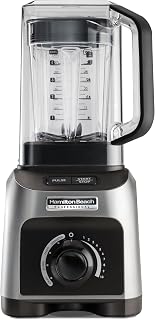
| Hamilton Beach Professional Quiet Shield Blender 58870 | 1,500 watts peak, 2.0 peak HP, 32 oz jar, tamper included | Small thick batches with a removable noise shield |
| Oster Classic Series 8-Speed Blender | 700 watts, 48 oz Boroclass glass jar, 8 manual speeds | Simple glass-jar blending for modest thick mixtures |
| Blendtec Designer 650 | 1,560 watts, 3.0 peak HP, 90 oz WildSide+ jar, 8 manual speeds | Large jars of thick blends with touchscreen control |
How We Chose These Blenders for Thick Bowls
The first filter was tamper support. A thick bowl with very little liquid almost always forms an air pocket above the blades at some point, and a tamper is the direct answer to that pocket: it pushes the frozen mass down, folds the corners of the jar back into the center, and lets the blades take another pass. Models with a tamper included, or a built-in tamper that works during blending, were placed ahead of models that rely on stopping the machine, opening the lid, and scraping with a spoon or spatula. Both routes can finish a bowl, but the tamper route is faster, cleaner, and far less likely to leave unblended chunks near the bottom.
The second filter was motor strength under load. Thick mixtures resist the blades from the first second, and a motor that fades when the jar is full of frozen fruit will leave the blend uneven no matter how long it runs. The product pages and manuals for the models below list peak wattage or horsepower figures, and those published figures, along with drive construction such as metal drive systems, shaped the order of this list. Where a maker publishes horsepower rather than watts, this article states horsepower only, and where sources disagree on a figure, the article says so instead of picking a number quietly.
Jar size and jar shape formed the third filter. A 32 oz or 34 oz jar keeps a small thick batch close to the blades, which is exactly where a dense blend needs to stay. A 48 oz container gives a middle path for one generous bowl or two smaller ones. The 64 oz and 90 oz jars in this list suit bigger batches, but a small amount of thick mixture in a very wide jar can spread thin across the bottom and move less, so the product sections note where a minimum batch matters. Jar material also counted: Tritan copolyester, BPA-free plastic, and Boroclass glass each appear below, with different weight, care, and handling.
Controls formed the fourth filter. A wide speed range with a low starting speed helps a thick blend begin moving without throwing frozen chunks at the lid, and Pulse gives short, controlled bursts for breaking up a stubborn pocket. Programs can help, but for spoonable bowls the manual controls matter more, because the person making the bowl needs to react to what the mixture is doing in the moment. Finally, warranty terms and basic dimensions were drawn from the same verified sources as every other figure in this article, and any figure those sources left unstated or in conflict is flagged in the product section rather than filled in from guesswork.
Ninja Foodi TWISTi High-Speed Blender DUO SS151
- 1,600 peak watts, with one review source listing 1,100 watts running; smartTORQUE motor
- 34 oz high-speed pitcher with built-in Twist Tamper and drizzle cap
- Also includes a 24 oz single-serve cup and an 18 oz extraction cup, with two spout lids
- 5 Auto-iQ programs: Extract, Smoothie, Frozen, Spread, Bowl; plus Pulse
- Hybrid Edge stainless-steel blades
- Warranty: the sources opened for this model did not state a warranty term, so no term is given here
The SS151 leads this list because its pitcher was designed around the exact problem thick bowls present. The Twist Tamper is built into the pitcher and is turned by hand while the machine runs, pushing thick ingredients back down into the blades without stopping the cycle, removing the lid, or reaching in with a spoon. For a bowl built on frozen fruit and very little liquid, that single feature changes the whole task: when an air pocket forms, a turn of the tamper folds the mixture back into the cutting path, and the blend keeps moving. The drizzle cap adds a second useful route, letting a small amount of extra liquid be added in a thin stream while blending, which is often all a stalled bowl needs.
The 34 oz pitcher deserves direct attention, because it is smaller than the full-size pitchers most buyers picture. For thick blends, that size is a strength rather than a drawback. A dense mixture in a compact pitcher stays gathered around the blades instead of spreading across a wide jar floor, and a batch sized for one or two bowls fills enough of the pitcher for the tamper to work on. The maker lists 1,600 peak watts and a smartTORQUE motor, and the program list includes a dedicated Bowl setting alongside Smoothie, Frozen, and Spread, which shows the intended use plainly. The included cups extend the machine to single drinks, but the pitcher and its tamper are the reason it sits first here. Buyers who want to blend a large pitcher of thin drinks for a crowd should note the pitcher size honestly and look further down this list; buyers whose main job is a stiff, spoonable bowl will find this the most purpose-built tool in the group.
Pros: Built-in tamper works while the machine runs; compact pitcher keeps thick blends near the blades; dedicated Bowl program; drizzle cap allows small liquid additions mid-blend; strong peak wattage figure from the maker.
Cons: The 34 oz pitcher is small for large batches; warranty term was not stated in the sources opened; single-source size and weight figures were not verified against the manufacturer, so they are not listed here.
Vitamix Propel Series 510 071394
- 2 HP motor; the maker publishes horsepower rather than watts for this model, and no wattage figure is stated here
- 48 oz container, BPA-free Eastman Tritan copolyester; mini tamper included
- 10 variable speeds plus Pulse
- 3 automatic programs: Smoothies, Hot Soups, Frozen Desserts
- Laser-cut stainless-steel blades; metal drive system
- Container and lid are dishwasher safe; self-cleaning cycle runs 30 to 60 seconds
- 5-year full warranty covering parts, labor, and return shipping both ways
- 9 in deep x 7.5 in wide x 17.5 in high; 9.6 lb
The Propel Series 510 pairs a mid-size 48 oz container with a mini tamper sized to that container, and that pairing suits thick bowls well. The container is large enough for a generous bowl or two modest ones, yet not so wide that a dense mixture can spread far from the blades. The tamper reaches the corners and pushes frozen fruit down into the vortex, and the ten variable speeds let the blend start low, gather itself, and then build speed as the mixture loosens. That gradual ramp matters for spoonable blends, because a sudden full-speed start can carve a hollow around the blades and leave the rest of the jar sitting still.
The maker lists a 2 HP motor, laser-cut stainless-steel blades, and a metal drive system, a combination aimed at holding up under repeated heavy loads. The three programs cover smoothies, hot soups, and frozen desserts, and while a thick bowl is usually finished by hand on the variable dial rather than by a program, the Frozen Desserts setting shows the machine is tuned for dense, cold mixtures as part of its normal work. Friction from the blades can heat soup, which speaks to how hard the motor can work a thick load over time. Cleaning is simple: the container and lid go in the dishwasher, and the self-cleaning method uses warm water and a drop of dish soap run for under a minute. For a household that makes bowls several mornings a week and wants a tamper-based machine in a moderate footprint, the 510 is a balanced, well-judged option.
Pros: Mini tamper included and sized to the container; ten variable speeds plus Pulse for careful thick-blend control; metal drive system; dishwasher safe container and lid; 5-year full warranty.
Cons: Wattage is not published by the maker, so only the 2 HP figure can be stated; 48 oz container is mid-size rather than large; no dedicated bowl program, so thick bowls rely on manual speed work.
Vitamix Explorian E320 VM0201
- The Amazon listing states 1,200 watts and 2.2 peak HP; those are the figures used here
- 64 oz low-profile container, BPA-free Eastman Tritan copolyester; tamper, cookbook, and owner's manual included
- 10 variable speeds plus Pulse; no preset programs
- 4-inch 4-prong laser-cut stainless-steel blades; blade friction heating makes hot soup
- Self-cleaning with warm water and dish soap
- 7-year full warranty
- 8 in wide x 11 in deep x 18 in high; weight figures conflict between sources, so no single weight is stated here
The E320 is the manual-control entry in this list: ten variable speeds and Pulse, with no preset programs at all. For thick bowls, that plain setup has real appeal. The person at the counter watches the mixture, works the tamper, and adjusts the dial in response, rather than handing the job to a timed cycle that cannot see an air pocket forming. The included tamper fits the 64 oz low-profile container, and the low-profile shape keeps the unit shorter on the counter while still holding a batch big enough for several bowls at once. A family that eats smoothie bowls together, with toppings set out for each person to add their own, is the natural audience for this size.
The Amazon listing for this model states 1,200 watts and 2.2 peak HP, and this article uses those figures only, since other sources cite different wattage numbers for the same motor family. The 4-inch laser-cut stainless-steel blades and friction heating that can bring soup to serving temperature point to a machine built to keep working a dense load without fading. The trade-off of the big container is batch size discipline: a small, single bowl's worth of frozen fruit in a 64 oz container sits low and wide, and the tamper has to work harder to keep it gathered. Make a fuller batch, or accept a few more stops to scrape and fold. Buyers who value simple dials, a long warranty, and room for a crowd-sized batch will find the E320 easy to live with.
Pros: Included tamper and a low-profile 64 oz container for larger bowl batches; ten variable speeds plus Pulse with no forced programs; 7-year full warranty; self-cleaning method is quick and simple.
Cons: A small thick batch can spread thin in the large container; no preset programs for hands-off blending; published wattage and weight figures conflict across sources, so only the listing figures are stated.
Blendtec Professional 800 P800C2901
- 1,800 watts; 3.8 peak HP, stated by the maker as peak input power rather than power delivered at the blade; up to 28,000 RPM
- 90 oz WildSide+ jar, BPA-free plastic; measurement markings to 36 oz blending capacity
- Sealed sound enclosure around the jar
- 6 pre-programmed cycles; the exact cycle names differ between sources and are not stated as a settled list here
- 11-speed touch slider plus Pulse; illuminated touch screen with LCD countdown timer; self-cleaning
- Patented blunt stainless-steel blades; the maker states no tamper is needed
- 10-year warranty for household and residential use; commercial use can void the warranty per the listing
- Dimensions and weight conflict between sources, so no single figures are stated here
The Professional 800 takes the opposite approach to thick blends from the tamper machines above. Blendtec's WildSide+ jar uses a five-sided shape and blunt, heavy blades, and the maker's position is that the jar geometry keeps pulling the mixture back into the blades, so no tamper is needed. In practice, that means thick bowls are made by loading the jar in a sensible order, choosing a cycle or working the 11-speed slider, and letting the jar shape do the folding. For cooks who dislike standing over a machine with a tamper in hand, that hands-off style is the draw, and the 1,800 watt, 3.8 peak HP motor gives the jar's approach the force it needs to keep a dense load moving.
The sealed sound enclosure is the other defining feature. The jar sits inside a closed cover that muffles the roar a high-power blender makes when it chews through frozen fruit, which matters in an early-morning kitchen or an open-plan home. The touch screen, countdown timer, and slider controls sit outside the enclosure and stay easy to wipe clean. Two cautions belong here. First, the jar is large, with markings to 36 oz of blending capacity, so a small thick batch can sit low in it; this machine suits households that make bowls for several people, or larger frozen mixtures in general. Second, the published dimensions and weight for this model conflict sharply between sources, so this article states neither rather than repeat an unreliable figure. Within those limits, the Professional 800 is the quietest route in this list to a stiff, spoonable bowl.
Pros: Strong 1,800 watt motor; sealed sound enclosure lowers blending noise; jar design aims to work without a tamper; 11-speed slider plus Pulse; 10-year household warranty.
Cons: Large jar is more than a single small bowl needs; exact program names, dimensions, and weight are not settled across sources; warranty covers household use only per the listing.
Hamilton Beach Professional Quiet Shield Blender 58870
- 1,500 watts peak; 2.0 peak HP
- 32 oz shatterproof jar, BPA-free plastic; stainless-steel blades; tamper included
- Variable speed dial from 1 to 10, spanning 3,000 to 18,000 RPM, plus Pulse
- 4 preset programs: Smoothie, Ice Crush, Puree, Clean
- Removable Quiet Shield noise-reduction enclosure; rubber-mounted motor components
- Jar, lid, and tamper are dishwasher safe
- 5-year limited warranty
- 8 in wide x 9 in deep x 16 in high; weight figures differ by source, so no single weight is stated here
- Per the manual, the hot-liquid maximum for this jar is 16 oz
The Quiet Shield 58870 is the small-batch, lower-noise option in this group, and both traits trace back to its 32 oz jar. That jar is small for a full-size countertop blender, and the product section of the research behind this article flags it directly. For thick bowls, though, small can be useful: a single generous bowl's worth of frozen fruit and a splash of liquid fills a meaningful share of a 32 oz jar, stays close to the blades, and gives the included tamper plenty to work against. The tamper is part of the package, which is not a given at this end of the range, and the variable dial runs from a gentle 3,000 RPM up to 18,000 RPM, so a dense blend can start slowly and build.
The removable Quiet Shield enclosure sets over the jar to reduce noise, and rubber-mounted motor parts add a second layer of sound control, which early risers making a frozen bowl before the rest of the house wakes will appreciate. The four programs cover smoothies, ice crush, puree, and cleaning, and the jar, lid, and tamper all go in the dishwasher afterward. Limits should be stated plainly. The 32 oz jar caps batch size, so feeding several people means blending in rounds. The manual sets a 16 oz maximum for hot liquids, well under the jar's full size, which matters if hot blending is part of the plan. And the published weight for this model differs between sources, so no weight is claimed here. As a compact, tamper-equipped machine for one or two bowls at a time, it holds a clear place in this list.
Pros: Tamper included; compact 32 oz jar keeps small thick batches near the blades; removable noise shield plus rubber-mounted motor parts; wide variable speed range; dishwasher safe jar, lid, and tamper.
Cons: Small jar means larger groups need several rounds; hot-liquid maximum is 16 oz per the manual; weight is not verified as a single figure across sources.
Oster Classic Series 8-Speed Blender
- 700 watts
- 6-cup (48 oz) Boroclass glass jar, dishwasher safe and shatter-proof per the maker
- DURALAST all-metal drive
- 8 manual speeds plus an ice-crushing button; no preset programs
- Crush Pro 4 stainless-steel 4-point blade
- Warranty, dimensions, and weight were not stated in the sources opened for this model, so none are given here
The Oster Classic Series 8-Speed is the simplest machine in this roundup, and it earns its place by being honest about what it is: a 700 watt blender with a glass jar, eight manual speeds, an ice-crushing button, and no preset programs. For thick bowls, that simplicity cuts both ways. There is no tamper in the package and no program tuned for dense blends, so a spoonable bowl from this machine takes more involvement: frozen fruit cut smaller, liquid added in small amounts, and stops to scrape the jar walls and push the mixture down by hand. A thinner, softer bowl, closer to a thick pour than a stiff scoop, is the realistic target here.
What the Oster does offer is a 48 oz Boroclass glass jar, which many cooks prefer for its weight, its resistance to scratching and staining, and the way it goes straight into the dishwasher, plus the DURALAST all-metal drive, which addresses the point where many simple blenders wear out. The Crush Pro 4 blade is a 4-point stainless-steel design, and the eight speeds give enough range to start a frozen mixture gently rather than slamming it at full power. Buyers should keep expectations matched to the 700 watt figure, the lowest in this list by a wide margin: hard frozen chunks in large amounts will strain it, and the thickest acai-style bowls that the lead product handles directly are beyond its comfortable range. For softer spoonable blends, small frozen pieces, and a glass jar at the center of the kitchen, it remains a workable, plainly built choice.
Pros: Glass jar is dishwasher safe and resists scratching; all-metal drive; eight speeds plus a dedicated ice-crushing button; simple controls with nothing to learn.
Cons: 700 watts is modest for very thick, low-liquid blends; no tamper included; no preset programs; warranty, dimensions, and weight were not stated in the sources opened.
Blendtec Designer 650
- 1,560 watts; 3.0 peak HP; 13 amps
- 90 oz WildSide+ jar, BPA-free Tritan copolyester; 36 oz blending capacity; 4-inch blunt stainless-steel blade
- 8 manual speeds plus Pulse
- 6 pre-programmed cycles: Smoothie, Ice Cream, Whole Juice, Hot Soup, Batters, Ice Crush
- Capacitive touchscreen interface; illuminated LCD timer showing time remaining
- Fully sealed, easy-clean base; heats soups through blade friction
- 8-year limited warranty covering parts, labor, and shipping
- 8.25 in long x 6.5 in wide x 15.1 in high
The Designer 650 closes this list with the same jar-led philosophy as the Professional 800, in a slimmer, touchscreen-led package. The 90 oz WildSide+ jar and its 4-inch blunt blade are designed to pull a mixture down into the cutting path without a tamper, and the Ice Cream cycle among the six programs is the closest thing here to a dedicated thick-blend setting: frozen desserts and spoonable bowls ask for the same kind of work, a dense frozen mass folded over itself until it turns smooth. The eight manual speeds and Pulse sit alongside the programs, so a bowl that needs a slower start or a few short bursts can be run by hand instead.
The maker lists 1,560 watts and 3.0 peak HP, figures that put this machine firmly in the high-power group, and blade friction can heat soup, which again shows sustained strength under load. The capacitive touchscreen wipes clean with a cloth, the base is fully sealed, and the LCD timer shows time remaining so a cycle can be watched without guesswork. The standing caution for both Blendtec models applies here as well: the jar's blending capacity is marked at 36 oz, and a small thick batch in a wide jar needs enough volume to circulate. Make the batch big enough, load softer ingredients low and frozen pieces above them, and the jar shape does its work. For households that want large batches, a clean counter profile, and a long 8-year warranty, the Designer 650 is a strong closing option.
Pros: High power at 1,560 watts and 3.0 peak HP; WildSide+ jar designed to blend without a tamper; Ice Cream cycle suits dense frozen blends; touchscreen wipes clean; 8-year limited warranty.
Cons: No tamper included for stubborn air pockets; wide jar needs a fuller batch for thick blends; touchscreen controls give less tactile feedback than a dial when hands are wet.
Buying Guide for Thick Spoonable Bowls
Start with the tamper question, because it decides the daily experience more than any figure on a spec sheet. If the bowls in your kitchen are built on frozen fruit with barely any liquid, a tamper is the tool that turns a stalled jar into a finished bowl. A built-in tamper that turns during blending is the most direct solution. A loose tamper sized to the jar does the same job with a little more handling. A jar-and-blade design that claims no tamper is needed asks instead for enough batch volume and a sensible loading order. None of these routes is wrong, but they should be chosen on purpose, with eyes open about how much standing and stirring each one involves.
Next, match jar size to the batch you actually make. One person eating one bowl most mornings is well served by a 32 oz or 34 oz jar, where a small dense batch stays gathered at the blades. A 48 oz container covers one large bowl or two smaller ones and adds room for softer blends. The 64 oz and 90 oz jars belong to households blending for several people at once, or making big frozen mixtures for sharing. Oversizing the jar for a tiny batch is the most common thick-bowl mistake: the mixture spreads across the jar floor, the blades spin under it, and the tamper or spatula has to do constant rescue work.
Then weigh motor figures with care. Peak watts and peak horsepower are the numbers makers publish, and they are useful for comparing machines within this list, but they are not the whole story. Drive construction matters, such as a metal drive system, and so does the speed range: a low starting speed keeps frozen chunks from rattling against the lid, and a dial or slider with many steps gives finer control than a few fixed buttons. Pulse deserves its own mention, because short bursts are the standard way to break up a frozen pocket without running the motor long enough to warm and loosen the bowl.
Jar material and cleaning come next. Tritan copolyester and BPA-free plastic jars are light, resist drops, and often go in the dishwasher, along with lids and tampers on several models here. A Boroclass glass jar feels solid on the counter and resists stains and scratches, but it is heavier to lift and pour from, or rather to scrape from, since a finished bowl is spooned out, not poured. Self-cleaning routines on the Vitamix and Blendtec models, warm water and a drop of dish soap run at speed, handle most residue, though thick blends leave a film under the blades that a brush reaches better.
Finally, read warranty terms as part of the decision, and note what each warranty actually covers. The full warranties in this list cover parts, labor, and return shipping for their stated years, while limited warranties cover less, and one model here limits its long warranty to household use. Where the sources for a model stated no warranty term at all, this article said so in that product's section, and a buyer who counts on warranty cover should confirm the term on the product page before choosing that model. Counter space deserves a last look as well: heights in this list run from about 15 in to 18 in, and an enclosure model needs room for its lid to open, so measure the gap under your cabinets before the box arrives.
FAQ
Why does a thick smoothie bowl stall a blender that handles drinks easily?
A drinkable blend carries enough liquid to circulate, and the circulation pulls fruit and ice down into the blades on its own. A spoonable bowl has very little liquid, so the mixture cannot flow. Frozen pieces bridge over the blades, an air pocket forms, and the blades spin in the hollow while the rest of the jar sits still. A tamper, a jar shape that folds the blend inward, or a few stops to scrape and stir are the ways through it, which is why thick-bowl performance depends on those features more than on raw speed alone.
How much liquid does a spoonable bowl need?
Only enough to let the blades first catch the mixture, often a few spoonfuls for a single bowl, added slowly. The drizzle cap on the lead product in this list exists for exactly this step, since a thin stream added during blending loosens the base of the blend without flooding it. Add too much at once and the bowl turns into a drink. Add it gradually, work the tamper, and stop as soon as the mixture moves as one mass and holds stiff peaks when the tamper lifts.
Is a smaller jar really better for thick blends?
For a single bowl, usually yes. A compact jar keeps a dense mixture piled over the blades instead of spread across a wide floor, so the blades stay engaged and the tamper reaches everything. A large jar works well when the batch is large enough to fill its lower third or more. The mismatch to avoid is a small batch in the widest jar on the counter, which is where stalling and uneven results most often begin.
Can a blender without a tamper still make thick bowls?
Yes, with the right loading and batch size. The Blendtec models in this list are built around a jar shape and blunt blade intended to pull the mixture down without a tamper, and their frozen dessert and ice cream cycles are aimed at dense blends. The method asks for enough volume in the jar and for ingredients layered so the mixture can start moving. A stubborn pocket can still call for a stop and a scrape with a spatula, but for many households that occasional pause is a fair trade for hands-off blending the rest of the time.
What should go into the jar first for a thick bowl?
Put the softest and most liquid-bearing ingredients at the bottom, closest to the blades: fresh fruit, yogurt-style bases, and the small amount of liquid the bowl allows. Frozen fruit and ice go on top, where their weight presses the load down as blending starts. Starting on a low speed, then building up, lets the lower layer turn into a moving base that pulls the frozen pieces down. Reversing the order puts the hardest pieces against the blades with nothing fluid around them, which is the most common reason a fresh attempt stalls in the first seconds.
How do I keep a finished bowl thick while adding toppings?
Blend the base fully before toppings enter the picture, scrape it into a chilled bowl, and add toppings straight away. Granola-style clusters, sliced fresh fruit, coconut flakes, and nut butter drizzled from a spoon all sit on top of a stiff base without sinking, provided the base was not over-blended. Running the machine long past smooth warms the mixture through blade friction and loosens it, so stop as soon as the texture turns even and glossy, and serve the bowl soon after making it.
Conclusion
Thick, spoonable bowls ask more of a blender than drinks do, and the seven machines above answer in different ways. The Ninja Foodi TWISTi SS151 leads because its built-in Twist Tamper and compact 34 oz pitcher were shaped for exactly this work, turning frozen fruit and a splash of liquid into a stiff bowl without repeated stops. The Vitamix Propel Series 510 and Explorian E320 bring tamper-based control in 48 oz and 64 oz sizes, with long warranties and simple, durable controls. The Blendtec Professional 800 adds a sealed sound enclosure to the no-tamper jar approach, the Hamilton Beach Quiet Shield 58870 pairs a tamper with a small jar and a noise shield for single bowls, the Oster Classic Series 8-Speed offers a simple glass-jar route for softer blends, and the Blendtec Designer 650 closes the list with high power, an ice cream cycle, and touchscreen control. Match the jar to your batch, choose the tamper style that fits how you like to work, and any of these machines can put a proper spoonable bowl on the table.
Related guides
More from Amazon
Programs that pair well with the guide above. Offers and eligibility are set by Amazon and may change.
Free shipping on eligible items, Prime Video and more. Eligible new members can start with a free trial.
Start a Prime free trialAudiobooks and podcasts to listen to on the go. Eligible new members can start with a free trial.
Try Audible freeAd-free music streaming. Eligible new subscribers can start with a free trial.
Try Music Unlimited freeA free business account with business pricing and bulk-buying tools for work, shop or home office.
Create a business accountAs an Amazon Associate we earn from qualifying purchases.
More ways to save in your kitchen
Programs that pair well with the guide above. Offers and eligibility are set by Amazon and may change.
Fast, free shipping on eligible items, plus Prime Video and more. Eligible new members can start with a free trial.
Start a Prime free trialSet up recurring deliveries of everyday items on eligible products. Terms and savings are set by Amazon.
Explore Subscribe & SaveRead from a huge library of eBooks, including how-to guides and cookbooks. Eligible new members can start with a free trial.
Try Kindle UnlimitedAudiobooks and podcasts for the commute, the garage or the kitchen. Eligible new members can start with a free trial.
Try Audible freeAs an Amazon Associate we earn from qualifying purchases. Using these links costs you nothing extra.

Write Your Review
No reviews yet. Be the first to share your experience!